Frozen Sahara Desert!
- Suchetha Karanth

- Nov 25, 2012
- 3 min read
Updated: Aug 5, 2023
At the end of the last Ice Age, the Sahara Desert was just as dry and uninviting as it is today. But sandwiched between two periods of extreme dryness were a few millennial of plentiful rainfall and lush vegetation. During these few thousand years, prehistoric humans left the congested Nile Valley and established settlements around rain pools, green valleys, and rivers. Sahara is the world’s largest desert covering an area of 9 million sq.km. in northern Africa. it extends from the coast of Atlantic ocean in the west to the Red sea and Iraq. it includes parts of Algeria, Chad, Egypt, Libya, Mali, Mauritania, Morocco, Sudan and Tunisia. One third of the desert is covered by sand dunes and stony plains. Crude oil and natural gas have been discovered beneath the Sahara and now being extracted. But there was a time when this great desert was covered by ice. Do you know when?

English: Sahara desert from space.
The first clue of ice was discovered when geologists found evidence of glaciation in the bedrock of the Algerian desert. The approximate time of the ice covering was calculated to be about 450 million years ago. the location of the desert at that time, as research studies have found out was near the South Pole. The size, shape, and position of the continents or landmasses of the earth have been constantly changing over the years. This happens due to the movement of plates in the earth’s crust.
When these giant plates move they carry the continents along with them. As per the available evidences, 200 million years ago there was a super-continent called Pangaea. It was formed when separate continental plates drifted together but later Pangaea also broke apart. But geologists are not sure about the continental locations before the formation of Pangaea. But rock studies provide some clue to the then location of Sahara. they suggest that Sahara was situated near the South pole which eventually leads us to believe that it was covered by ice during that period of history.
This period, is called Ordovician period when North Africa was at South pole ice-cap and the equator ran diagonally across today’s North America.
When the rains came
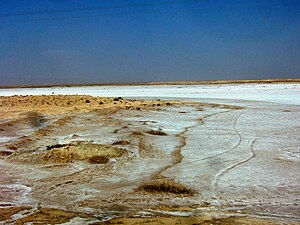
But around 10,500 years ago, a sudden burst of monsoon rains over the vast desert transformed the region into habitable land. This opened the door for humans to move into the area, as evidenced by the researcher’s 500 new radiocarbon dates of human and animal remains from more than 150 excavation sites.
“The climate change at [10,500 years ago] which turned most of the [3.8 million square mile] large Sahara into a savannah-type environment happened within a few hundred years only, certainly within less than 500 years,” said study team member Stefan Kroepelin of the University of Cologne in Germany.
Frolicking in pools In the Egyptian Sahara, semi-arid conditions allowed for grasses and shrubs to grow, with some trees sprouting in valleys and near groundwater sources. The vegetation and small, episodic rain pools enticed animals well adapted to dry conditions, such as giraffes, to enter the area as well. Humans also frolicked in the rain pools, as depicted in rock art from Southwest Egypt.
In the more southern Sudanese Sahara, lush vegetation, hearty trees, and permanent freshwater lakes persisted over millennia. There were even large rivers, such as the Wadi Howar, once the largest tributary to the Nile from the Sahara. “Wildlife included very demanding species such as elephants, rhinos, hippos, crocodiles, and more than 30 species of fish up to 2 meters (6 feet) big,” Kroepelin told LiveScience.
A timeline of Sahara occupation : 22,000 to 10,500 years ago: The Sahara was devoid of any human occupation outside the Nile Valley and extended 250 miles further south than it does today. 10,500 to 9,000 years ago: Monsoon rains begin sweeping into the Sahara, transforming the region into a habitable area swiftly settled by Nile Valley dwellers. 9,000 to 7,300 years ago: Continued rains, vegetation growth, and animal migrations lead to well established human settlements, including the introduction of domesticated livestock such as sheep and goats. 7,300 to 5,500 years ago: Retreating monsoonal rains initiate desiccation in the Egyptian Sahara, prompting humans to move to remaining habitable niches in Sudanese Sahara. The end of the rains and return of desert conditions throughout the Sahara after 5,500 coincides with population return to the Nile Valley and the beginning of pharaonic society.
Related articles


Comments